
5 Years of Love Design Studio
Reflections on change, momentum, uncertainty and the work still ahead of us
The world is changing faster than our ability to understand it, Adam Curtis explained in his documentary ‘Shifty’ earlier this year, a line that, for me, captures 2025 more clearly than anything else, and reflects a feeling many people now share.
In the sustainability landscape, we are experiencing a rapid, disorienting shift: heatwaves are arriving faster than we can adapt; AI tools are accelerating beyond regulation; and global political uncertainty is weakening the resolve of local leaders committed to net zero.
The return of Donald Trump to the US presidency on January 20th sent shockwaves through global climate policy. The language of ESG began to lose momentum, distorted by politics and a backlash to dodgy greenwashing.
The beginning of 2025 felt like a turning point; the construction sector felt, for the first time in our journey, like it had collectively paused. After four brilliant years of progress, partnership, and momentum, 2025 arrived with a kind of systemic whiplash. And yet, it was also the most clarifying and, strangely, the most rewarding year so far. This sense of living inside a global, ever-moving, ever-unpredictable ‘shift’ has helped unfold the nature of Love Design Studio itself.
When Shifty was released in June 2025, Curtis’ framing helped me understand what those first six months had really been: not a collapse, not a failure, but a shift, a breaking of one era and the unsettling, uncomfortable emergence of another.
A moment when our work mattered not less, but more. A moment when the need for evidence, for care, for rigor, for imagination, and for organisations willing to stand firm in uncertainty, became unmistakably clear.
And so, as much as the last five years have been defined by change, momentum and learning, it is this most recent period, challenging as it has been, that has distilled the essence of who Love Design Studio is, and what it exists to do.
Turning point
Love Design Studio got-going in late 2020, ahead of COP26 in Glasgow. There was a feeling, shared across UK councils, institutions, and the built environment, that we were on the cusp of a major step-change in climate ambition. Climate action plans were being published, local authorities were declaring climate emergencies and sustainability teams were expanding on the race to perfect net zero.
It felt like real momentum and a chance for Love Design Studio to grow with this surge to support councils, design teams and developers on the traditional stuff, like environmental planning services, sustainable certification (i.e. BREEAM) and net zero carbon strategies. Love Design Studio did the basics well. But something else was also happening beneath the surface, something Curtis might describe as the unintended consequence of intersecting crises. While the world was gearing up for the promise of COP26, another threat was gathering pace: record-breaking heat, and with it, the impact on our cities, infrastructure and public health.
Why Shade the UK was founded
By 2020, it was increasingly clear to me, that overheating, especially its effects on vulnerable people, was going to define the next decade. And then in 2022, the UK hit 40°C for the first time in recorded history.
The conversation shifted overnight.
Heat was no longer an abstract scenario or something to be ignored.
Life threating temperatures were here to stay.
Shade the UK began with a simple realisation: if we wait for policy to catch up, our buildings won’t be able to cope and people will die as a result of extreme heat. A realisation that became reality in July 2022 when the UK experienced in excess of 3,000 heat related deaths.
Shade the UK was built to protect the most vulnerable from the impacts of a changing climate, push for heat-resilient cities, and help bring social justice into the heart of climate adaptation. We’ve expanded and developed year-on-year and it’s been wonderful to see the outcomes of our research, projects and campaigns with the likes of British Red Cross, Greater London Authority, Grantham Research Institute and C40 Cities, as well as community groups and people across London and the UK.
The shifting role of sustainability consultants
Since founding LDS and STUK, we have seen the profession of ‘sustainability consultant’ transform and evolve from being solely linked to the built environment sector.
Sustainability consultants now operate in a far broader landscape: energy and carbon, circularity and materials, public health and wellbeing, climate adaptation and resilience, biodiversity, behaviour and culture, fashion and supply chains, food systems, finance and economics, technology and AI, and policy and social justice.
We are now also seeing a much different approach from our client base, that isn’t policy driven:
organisations wanting exemplar retrofit standards.
developers aiming for best-in-class sustainability.
institutions wanting to lead on climate resilience.
corporations wanting climate integrity, not greenwashing.
contractors seeking credible, independent validation that their design strategies genuinely meet high sustainability and wellbeing standards.
This places a shared responsibility on us to keep learning; to remain curious, rigorous, compassionate, and evidence-led, as new frontiers of sustainability consultancy emerge beyond the traditional built environment sector.
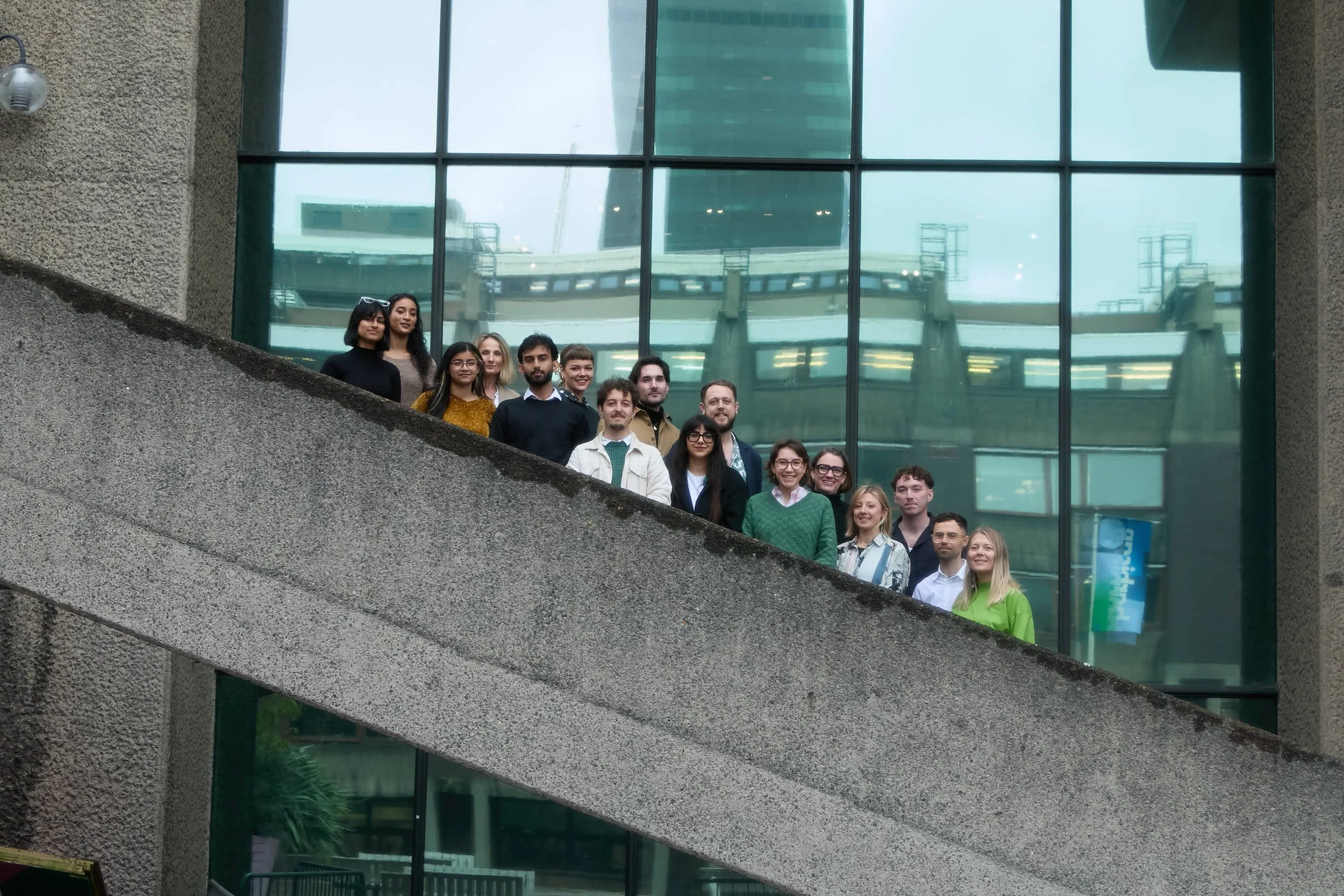
Our team at Love Design Studio today reflects that beautifully: a group of people who care deeply, who challenge assumptions, and who believe that sustainability is more than a checklist.
New work for a new world
There are countless moments and people I could name and thank throughout our five years, but here I will highlight a few projects and achievements that best represent the shift in who we are and where we are heading.
We set up Love Design Studio, and started Shade the UK alongside it, to respond to the growing reality of climate risk and rising heat.
We supported complex retrofit thinking for the Barbican Estate with the City of London, balancing heritage with better building performance.
We helped deliver an ambitious zero-carbon school with Playle & Partners and Apex Contractors (later helping the team and school to achieve an A+ EPC).
We guided teams through complex planning work, including GLA-referable projects and major developments.
We worked with research partners including the Grantham Institute, and supported the Turning Up the Heat report.
We delivered VCSE energy audits and supported Holborn Liveable Neighbourhoods with a study on adaption and resilience, staying close to everyday realities of a changing climate.
We created 40 Degree Stories, sharing lived experiences of heatwaves from across London and the UK.
We brought adaptation research into public view through an exhibition at The Building Centre with Shade the UK.
We shared our work and insights with wider audiences — being interviewed by the BBC and collaborating with podcasters and storytellers to engage the public on climate resilience.
We also launched The Loveseat, exploring materials, reuse and transparency through environmental product declarations (EPDs).
The next five years
Next year we plan to share our Manifesto for Change, a collaborative piece of research which was borne through our series of online talks taking place earlier this year. We will outline the systemic shifts we believe the industry needs to make and the areas where LDS will focus its energy, research and advocacy. Our aim is to work with others to build momentum rather than wait for it. We believe real change comes from those who can move comfortably between worlds, between activism and governance, research and practice, community and industry.
That is where we sit and will continue to work.
As Curtis reminds us in Shifty, we are living through a time where change outpaces understanding. But that does not mean we are powerless. It simply means we must learn as we go, act with integrity, stay grounded in evidence, and refuse to be paralysed by uncertainty. If anything, the last five years have shown us that even in a shifting world, there is space for purpose. That is what we will continue to bring into the next five years and beyond.
That is why I would like to introduce our next chapter which centres on three core initiatives:
Love Zero Waste
We know our natural resources are being depleted at an unsustainable rate.
Love Zero Waste is our movement to confront the unsustainable use of our natural resources by helping the fit-out and refurbishment sector shift towards a truly circular, low-impact future.
Love Retrofit
Ending our over-reliance on fossil fuels must become a priority, as they are finite resources that are accelerating climate change.
Through Love Retrofit we are helping buildings transition away from fossil fuels through ethical, people-centred retrofit that reduces demand, improves comfort and accelerates the shift to low-carbon energy.
Love Adaptation
The world is warming, and we are already seeing the impacts on people, health, and infrastructure.
Love Adaptation is our commitment to support Shade the UK by helping communities and organisations adapt to rising temperatures through thermal analysis, research, community engagement and built-environment expertise.
These initiatives reflect the kind of sustainability practice we believe the future demands: human-centred and ambitious. If the world is shifting, then we will help shape that shift with purpose.
A thank you
To our clients, collaborators, community partners, councils, researchers, friends, and supporters, thank you.
To our team, thank you for your care, your curiosity, your intellect, your diligence, and your belief in doing things properly.
Five years in, we feel proud, grateful, and ready for the next chapter.
There is so much more to come!