
It is often those who are most disadvantaged or under-resourced who show the greatest eagerness to contribute to decarbonisation. Perhaps it is because they understand, more than most, the sharp impact of rising energy bills and its link to decarbonisation. They know that cutting energy demand means freeing up money for something more important: looking after communities and continuing the brilliant, life-changing work they do every day.
Through the Groundwork VCSE Energy Efficiency Scheme, Love Design Studio had the opportunity to work with 31 inspiring community organisations across the South East and South West of England, helping them identify opportunities to reduce energy bills and carbon emissions. Most importantly, it was about helping these organisations spend less on running their buildings and more on the people and communities they support.
Our work on this project forms part of Love Retrofit, our initiative to better connect retrofit with the people it is meant to serve.
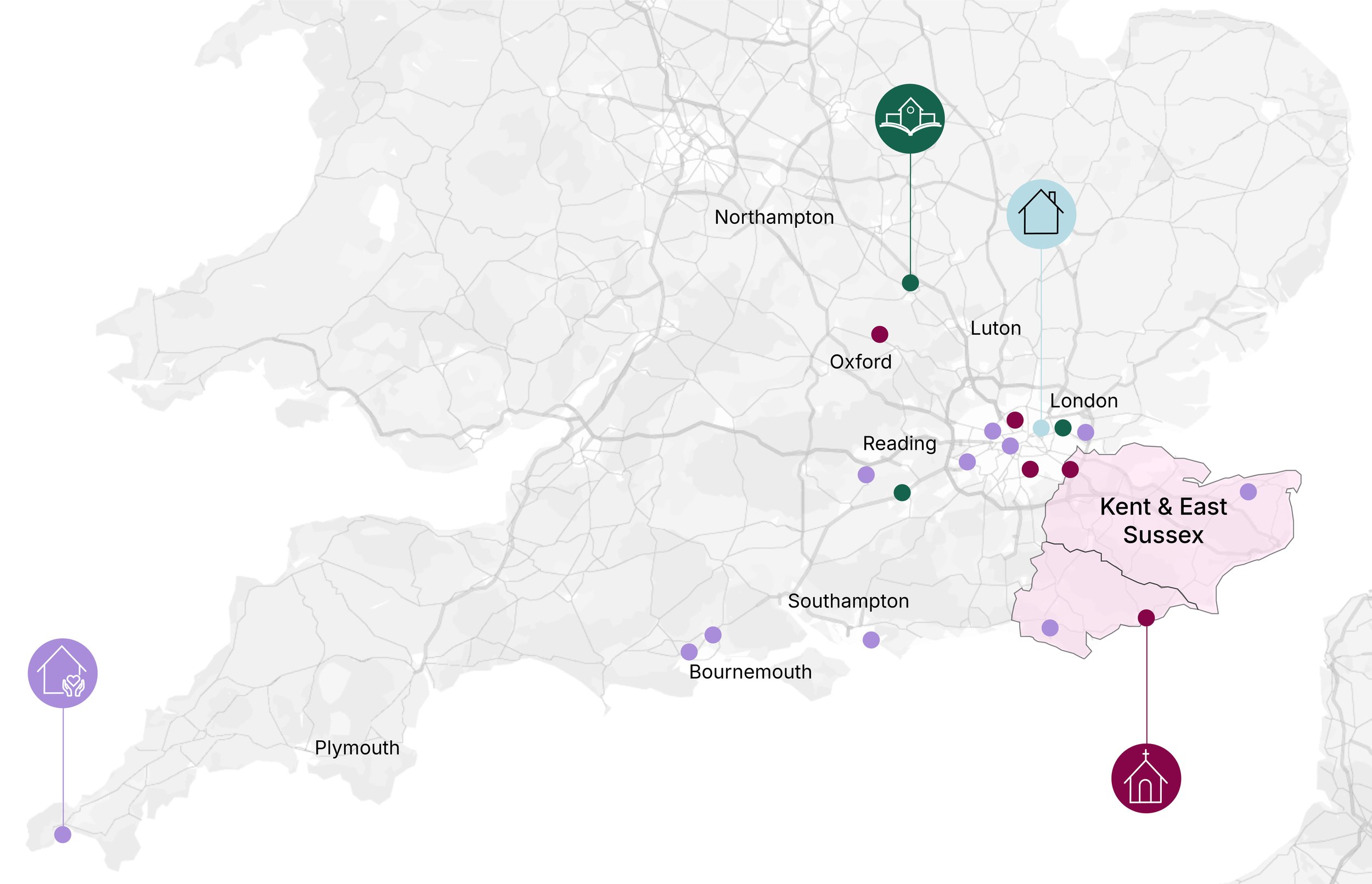
Our insights from 31 community organisations
From homeless shelters to urban farms, we audited 31 unique organisations, meeting the dedicated people who keep them running.
Here are two stories from Kent & East Sussex.
The Umbrella Centre, Whitstable
The Umbrella Centre is everything a community centre should be: flexible, alive, and utterly unpredictable. Formerly St Mary’s Hall, a parish church dating back to 1905, it now plays host to a vibrant schedule of community-led programming that’s as diverse as Whitstable itself. It’s a cafe, a coworking hub, a dance hall, a health centre, a rehearsal space, and a venue for weddings and pantomimes alike. It’s even a stand-in bank branch on Tuesdays.
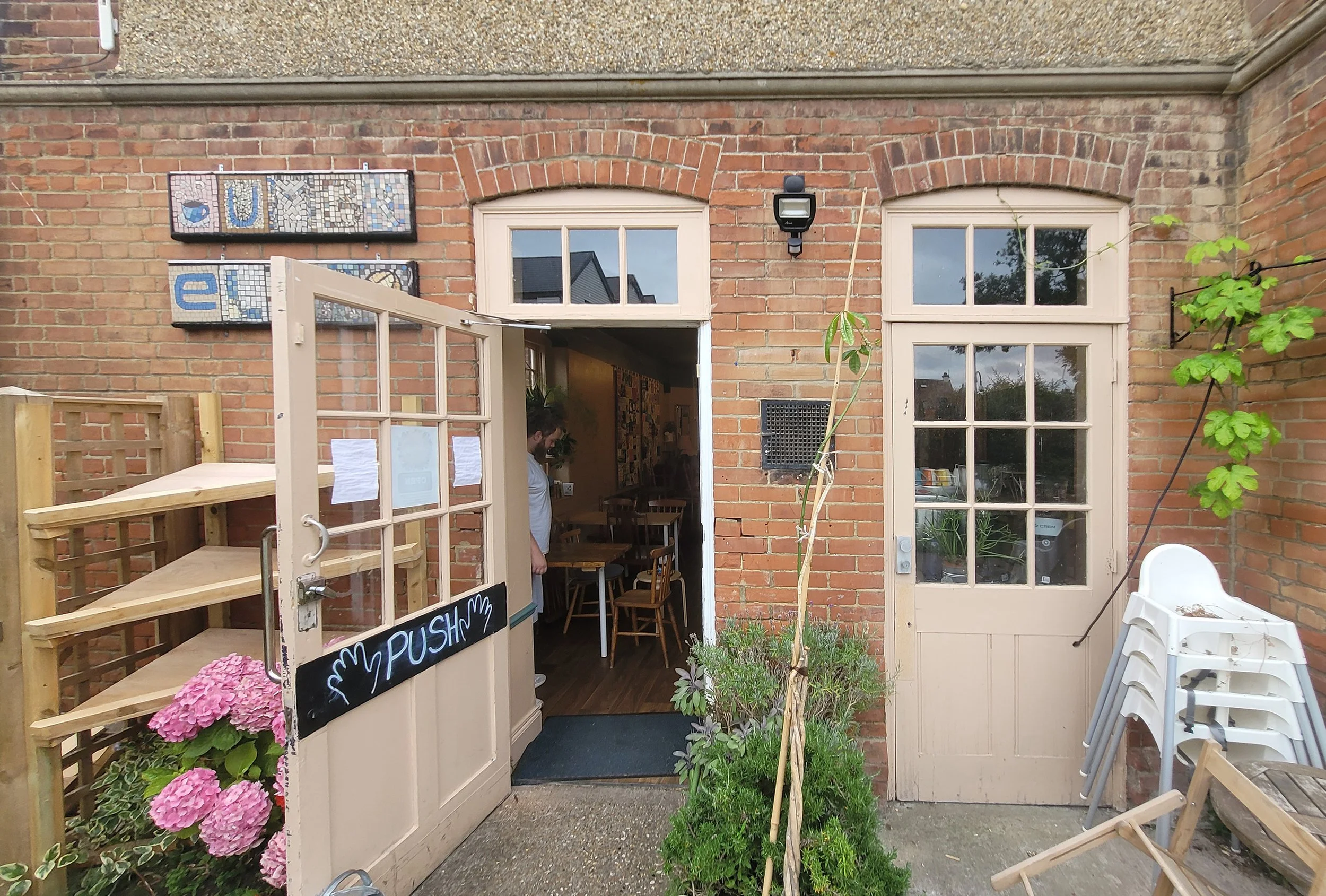
This flexibility doesn’t just happen. It’s the result of real effort from a local team, including Craig, the manager who helps hold it all together. Craig keeps the books balanced, looks after bookings, plans upgrades, and steers the centre’s purpose with calm, collected focus. Under his watch, the Centre has recently returned to financial surplus, with profits reinvested into improvements, an impressive feat for a self-funded charity.
From an energy perspective, the building is showing its age. Heating is provided by domestic gas boilers. Hot water is a patchwork of systems. Natural ventilation is the norm, and while LED lighting has been installed in most spaces, the grand main hall still relies on older fixtures. Like many historic buildings, the centre struggles with flaking plaster and heat loss through walls that were never designed for modern performance standards. But the building has promise—and people who care deeply about seeing it thrive
Love Design Studio’s energy audit revealed plenty of opportunity. Installing 36 solar PV panels on the roof could generate substantial energy savings and reduce emissions. Replacing gas boilers with air-source heat pumps, if paired with the right zoning and internal distribution upgrades, could decarbonise the system further. Targeted internal insulation and point-of-use hot water systems could round out the improvements without compromising the character of the space.
The building works hard for Whitstable. It gives space to groups that might otherwise struggle to find a home, like stroke survivors rebuilding their strength, mothers forming new bonds, and even grassroots wrestlers who’ve found their ring under its vaulted ceiling. In a world where too many buildings are flattened and replaced when they struggle to keep up, the Umbrella Centre shows that evolution is possible, especially when it’s led by community need, not just architectural ambition. It’s a reminder that buildings are not static. They move with the people inside them.
And the best ones, like this, know how to change shape.
St George’s Hall, Moulsecoomb
St George’s Hall was once a Christian church, built in 1932 to serve the growing community of Moulsecoomb. Today, it still does exactly that, though the pews are long gone, and in their place are play mats, lunch tables, and ESOL workbooks.
What is a community centre, really, if not a broad church? Or a mosque, or a synagogue, or a sanctuary? A place where people gather with a shared sense of purpose, whether that’s learning English, sharing food, doing tai chi, or simply having somewhere warm and welcoming to go.
Rebuilt as a community hub in 1989, St George’s Hall now plays host to a kaleidoscope of activity: the Moulsecoomb Bangladeshi Women’s Group, resident meetings, a buzzing Kidz Klub, lunch clubs, social supermarkets, and adult education. They’re what make this place sacred in a new sense.
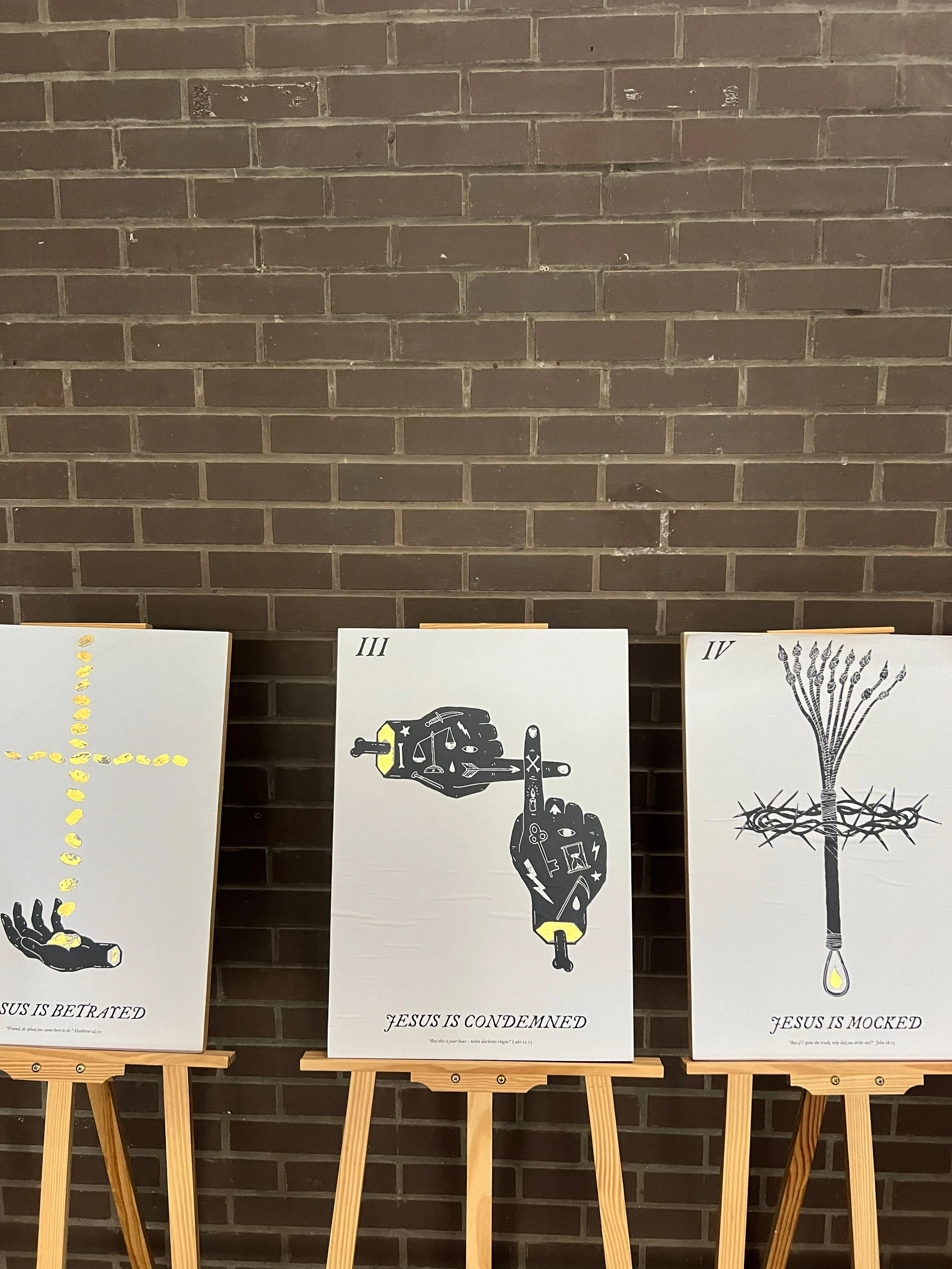
And as the space has evolved, so too must the infrastructure behind it. Love Design Studio's energy audit showed what’s possible: simple upgrades like switching out tired CFL and T8 lights for LEDs, installing solar panels on the roof, and improving insulation in the roof space could have real impact, lowering energy bills and cutting emissions. Replacing the aging gas boiler with an air source heat pump would complete the journey toward cleaner energy, while maintaining the comfort needed for those 30 children or 60 lunch club members who walk through the door each week.
It’s easy to forget buildings have lives too, and perhaps even more importantly, afterlives. St George’s Hall is no longer a single-faith space, but it still offers sanctuary. And in that sense, it remains holy ground, not through ritual or scripture, but through warmth, care, and community.
Each of the remaining stories tells a similar tale: of places that mean something special to their communities and people working to keep them alive. From the bustling Hackney Empire to the calm of the Umbrella Community Centre in Whitstable, our visits showed us that behind every building are the people who make it matter.