
It is often those who are most disadvantaged or under-resourced who show the greatest eagerness to contribute to decarbonisation. Perhaps it is because they understand, more than most, the sharp impact of rising energy bills and its link to decarbonisation. They know that cutting energy demand means freeing up money for something more important: looking after communities and continuing the brilliant, life-changing work they do every day.
Through the Groundwork VCSE Energy Efficiency Scheme, Love Design Studio had the opportunity to work with 31 inspiring community organisations across the South East and South West of England, helping them identify opportunities to reduce energy bills and carbon emissions. More importantly, it was about helping these organisations spend less on running their buildings and more on the people and communities they support.
Our work on this project forms part of Love Retrofit, our initiative to better connect retrofit with the people it is meant to serve
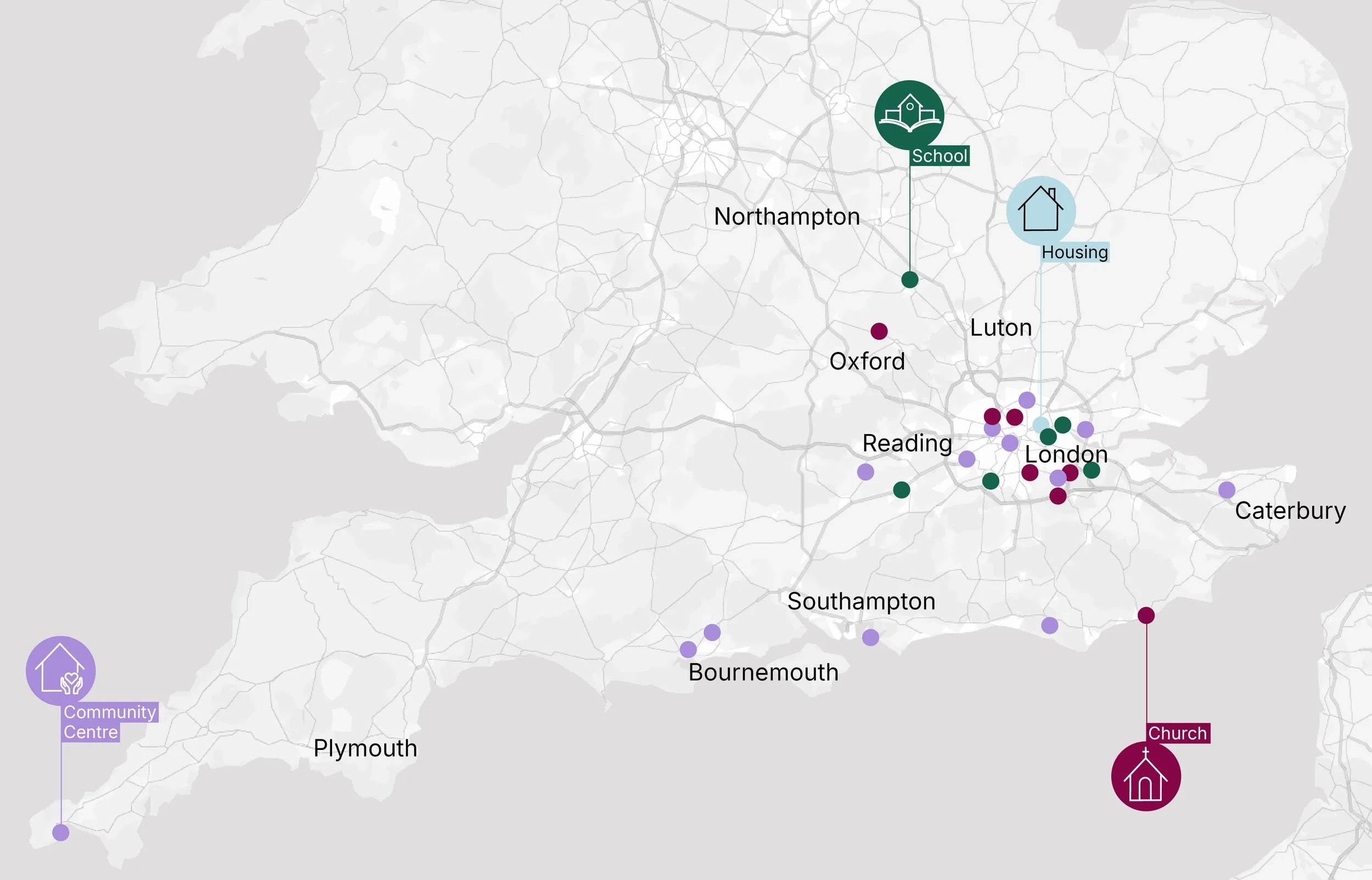
Our insights from 31 community organisations
From homeless shelters to urban farms, we audited 31 unique organisations, meeting the dedicated people who keep them running.
Here are two stories from Hampshire.
Thorney Hill Community Centre
Thorney Hill Community Centre has stood on its current site for over 20 years, built atop a hill on the edge of the New Forest. Inside, it’s a single-storey structure centred around a vaulted main hall with floor-to-ceiling glazing on both sides, flooding the space with natural light. It’s practical and welcoming, with a small kitchen, accessible toilets, a store room and office and a multi-functional heart that beats in rhythm with its community.
The centre plays an especially important role in serving the local travelling community, a key reason it was built in the first place. It is a place that welcomes people in and moves with the seasons.
Local volunteer, Alison, who only received the building keys that January, had already helped draft a six-month plan for the centre and brings a sharp administrative eye from her time as a Parish Clerk in Berkshire. She was joined by another volunteer, Ian, a steering group member with a background in insurance and DIY who leads maintenance and volunteer coordination. Both Alison and Ian volunteer their time to ensure that the building continues to serve their community.
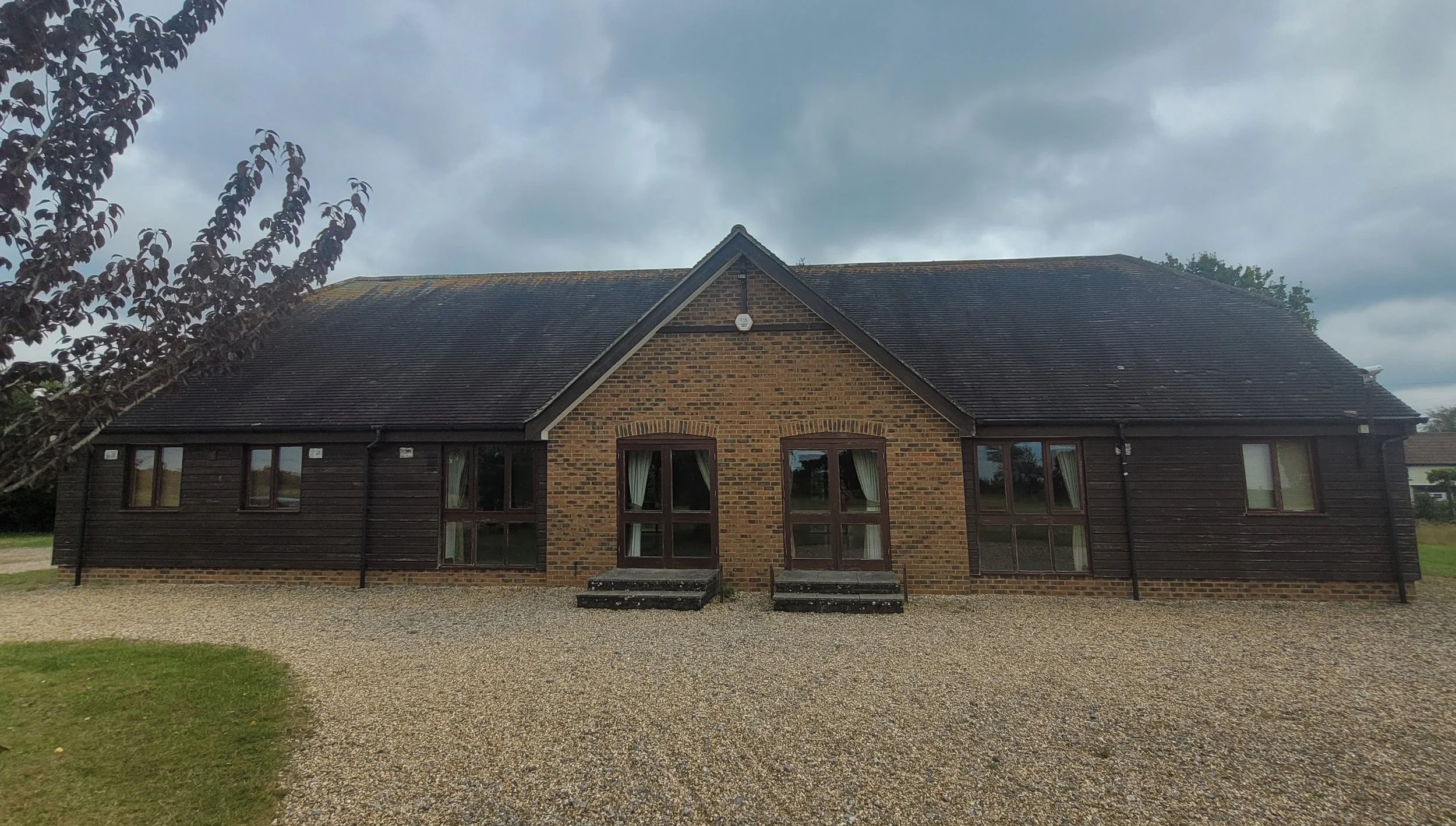
The centre’s activities are varied: bingo nights, folk concerts, fitness classes, social mornings, and seasonal children’s programmes. While the building is loved and well-used, the energy system is holding it back. Four wall-mounted fan heaters heat the main hall; panel heaters cover the entrance lobby and toilets. The kitchen and water system run on electric, but without a clear zonal control strategy, much of that energy is lost. Heating is often turned on an hour before an event, and off straight after, but maintaining comfort is challenging in the winter; especially with it being so exposed to the wind.
Throughout the centre, there are clear areas of improvement. The current heating system is inefficient, limiting use of the space in colder months. While the board had considered infrared heaters from a nearby church, this wouldn’t significantly reduce bills and could increase running costs if overused.
Instead, Love Design Studio recommended exploring an air-source heat pump (ASHP) with ducting, especially viable here given the building’s modest size and relatively straightforward internal layout. Alongside this, solar photovoltaic (PV) panels, either rooftop or ground-mounted, could significantly offset the centre’s electricity demand. And with the building’s unobstructed hilltop location and relatively simple form, there is a real opportunity for the centre to become a net-positive building, producing more energy than it consumes over the course of a year.
Love Design Studio also advised on practical fabric improvements: better insulation in the north wall and kitchen, addressing visible draughts through timber-framed fire doors, and a complete lighting upgrade to LEDs. These low- to medium-cost interventions would reduce energy waste immediately while improving comfort and usability.
Thorney Hill’s value isn’t just in its walls, windows, or kilowatt hours, it’s in the conversations over tea, or a jig, the music echoing through the hall, the shared memories of a folk band or community exhibition. It’s also a reminder that true sustainable design is about making sure the strategy is understood, maintained, and serves real needs.
In this wooden-clad hall among the tree, with roots in the traveller community, branches reaching out to all who visit, the future looks bright. Not just solar-powered, but people-powered.
The Acorn Centre, Wecock Farm, Hampshire
At Love Design Studio, we are often auditors and assessors, but sometimes, we act as enablers and facilitators, validating and supporting people who already deeply understand what their building needs. Scott, the Acorn Centre's supervisor is a true champion of that.
Scott knew where the hot and cold spots were. He understood the centre’s energy use intimately. He had already identified the best opportunities for savings, from the roof’s potential for solar panels to the erratic heating schedule that needed taming. Our work was to help put the numbers and evidence behind what he already instinctively knew.
At The Acorn in Portsmouth, it was clear the real driver of success was people. Scott, along with the original founders, has been the heart of the centre. What makes this building work isn’t design or branding, but the deep care, leadership, and purpose behind it. Scott has helped it grow, adapt, and truly serve its community.
The centre is a warm space in every sense of the word. It’s open seven days a week, offering support to people struggling with food poverty, mental illness, or social isolation. It hosts youth clubs, pantomimes, a café, and even a laundrette. And the affection that people feel for it is clear, so many of those who benefit from its services also volunteer their time to help run it.
What the energy audit showed
From a technical perspective, the centre is relatively modern, built in 2004, and extended post-2020. It’s generally in good condition, with double glazing and insulated roof spaces. The space heating and hot water are powered by gas boilers, including two radiant heaters in the main hall. However, heating is one of the largest expenses, sometimes accounting for nearly 50% of operational costs. The team had made efforts to optimise this, including adjusting temperatures and switching off systems over summer.
The nurseries on either end of the building require stable temperatures to maintain their Ofsted-rated excellence, but this sometimes results in over-heating the rest of the space to compensate for cold spots. There are also areas of uneven heat distribution due to sun orientation and the limits of the existing system.
The audit identified the following opportunities:
Install solar PV: With plenty of roof space and rising electricity costs, this is a prime candidate for solar. PV panels could reduce bills significantly, especially when paired with battery storage.
Upgrade to full LED lighting: While some replacements have been made, there’s more to do.
Install Mechanical Ventilation with Heat Recovery (MVHR): This would help balance internal temperatures and redistribute heat where it’s needed.
Explore water-saving measures: Rainwater harvesting was discussed as a future opportunity.
Refine heating controls and reduce gas dependency: Especially in the wings and during off-peak periods.
While the building fabric is generally strong, thanks to cavity wall construction and double glazing, thermal efficiency gains could still be made by improving zoning and better managing HVAC systems.
It's greatest carbon reduction measure though was Scott.
Each of the remaining stories tells a similar tale: of places that mean something special to their communities and people working to keep them alive. From the bustling Hackney Empire to the calm of Thorney Hill Community Centre, every visit showed us that behind every building are the people who make it matter.