
Worple Road
Location
Year
Client
Latium Real Estate and Infinite Partners
Architect
BGY
London Borough of Merton
2024
Service Areas
The Brief
The development in the London Borough of Merton comprises a new lifestyle hotel, with creative employment space for local businesses at ground floor level.
Love Design Studio was appointed to work alongside the design team throughout RIBA stages to help the scheme achieve high sustainability standards and promote best practice in both design and construction.
The approach to sustainability is guided by national and local policy, including the NPPF, London Plan (2021) and relevant Merton planning documents, with a target of achieving BREEAM ‘Excellent’.
The Process
Love Design Studio was appointed at the early stages of the project, undertaking workshops and working with the wider design team to establish the overall sustainability strategy.
From this early involvement, a fabric-first approach was established to guide the design, prioritising passive design measures to maximise fabric efficiency before introducing low and zero-carbon technologies to reduce energy demand for heating and cooling.
Our work explored key areas of sustainable design, including circular economy and material reuse, whole-life carbon assessment, overheating analysis, energy strategy, air quality and BREEAM.
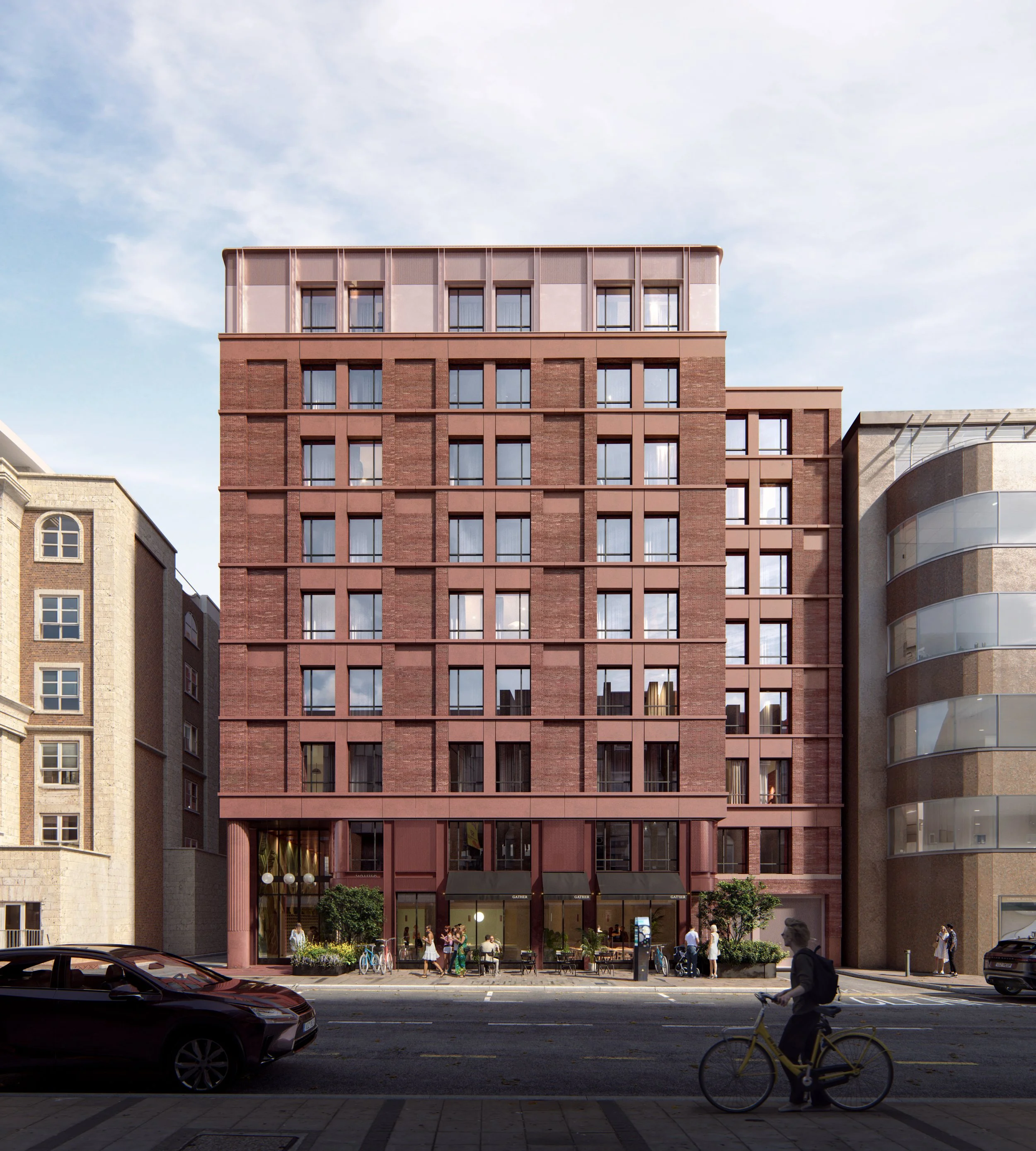
External render © BGY
BREEAM
A BREEAM New Construction V6.1 assessment is being undertaken to evaluate the scheme’s sustainability performance and identify opportunities to maximise credits across key areas.
The assessment covers the ten BREEAM categories: Management, Health and Wellbeing, Energy, Transport, Water, Materials, Waste, Land Use and Ecology, Pollution, and Innovation.
Whole-Life Carbon
We are working closely with the design team to reduce embodied carbon emissions associated with demolition and reconstruction by applying three key principles:
Reuse materials from the existing building wherever possible.
Find opportunities for materials to be reused elsewhere and avoid landfill.
Ensure new materials are responsibly and sustainably sourced.
Overheating Analysis
Detailed overheating analysis using dynamic modelling has informed the façade design, shading and ventilation strategies, helping to improve thermal comfort and reduce the risk of overheating.
Energy Strategy
An energy strategy has been developed to reduce operational energy demand and carbon emissions. This will be delivered through a fabric-first approach, efficient building services and on-site renewable energy generation, supporting the delivery of a low-carbon, future-ready development.
Air Quality
The Air Quality Assessment helps shape ventilation and mitigation strategies to minimise impacts on local air quality and create healthier indoor environments for future occupants.
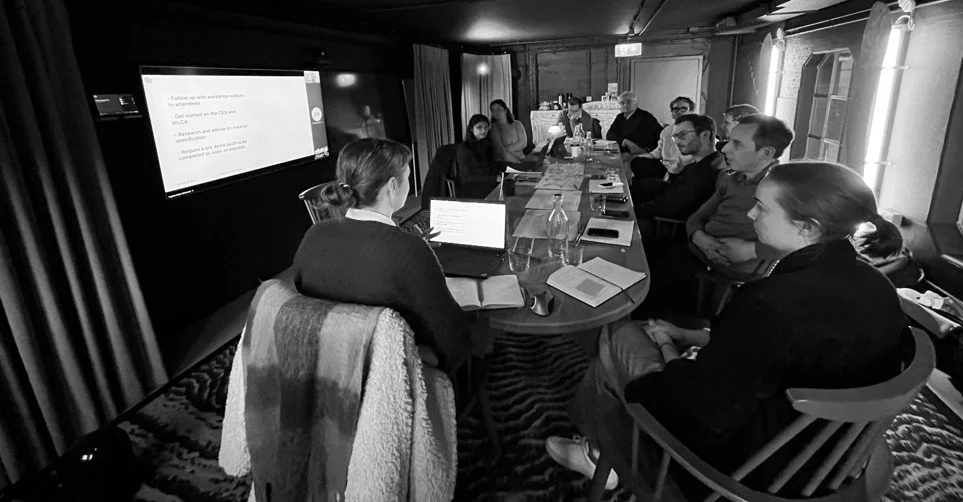
Circular economy workshop led by Love Design Studio
Circular Economy
Circular economy principles have been developed through workshops with the wider design team, helping to embed these principles throughout all RIBA stages.
The scheme uses circular design approaches, including:
Reusing and recycling materials off-site where elements cannot be repurposed on-site.
Maximising the long-term value of the site through design for adaptability, disassembly and longevity.
The proposal also aims to meet key GLA targets by:
Diverting 95% of demolition and construction waste from landfill through reuse, recycling and recovery.
Specifying reused or recycled materials and setting individual targets of at least 20% by value of materials.