Jamie Oliver Cooking School

Location
City of Westminster
Service Area
Year
2025
Client
Jamie Oliver Cookery School & Cafe
The Brief
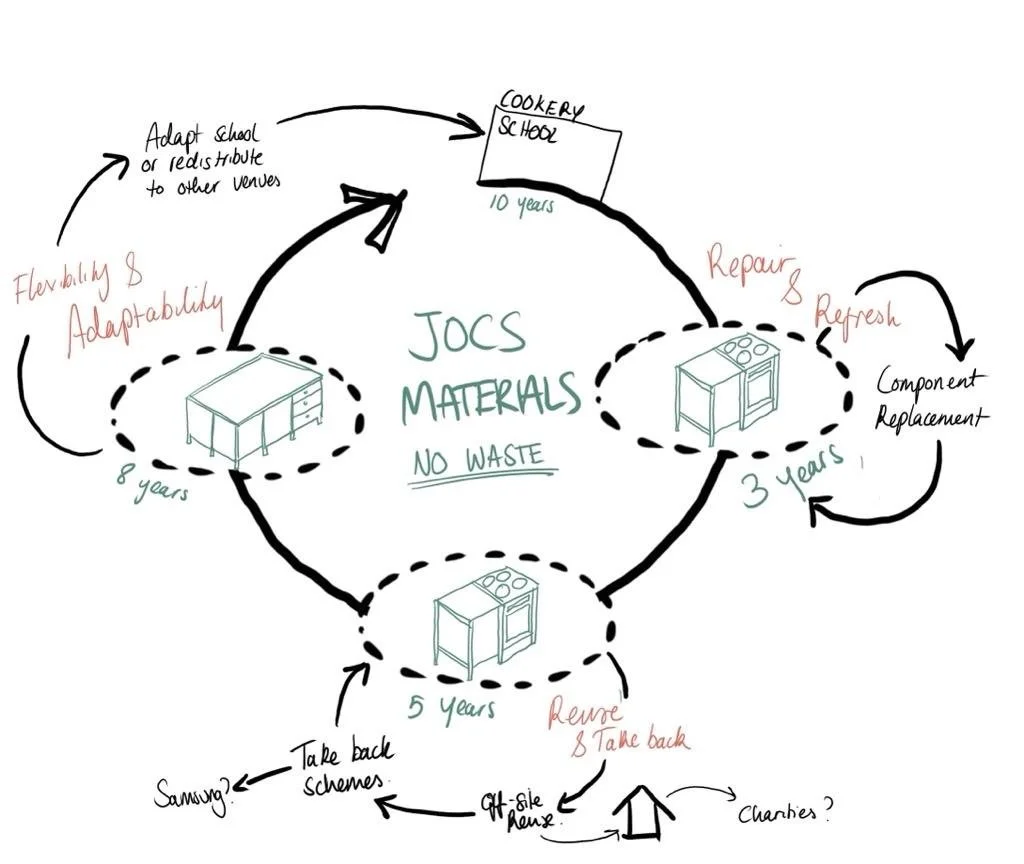
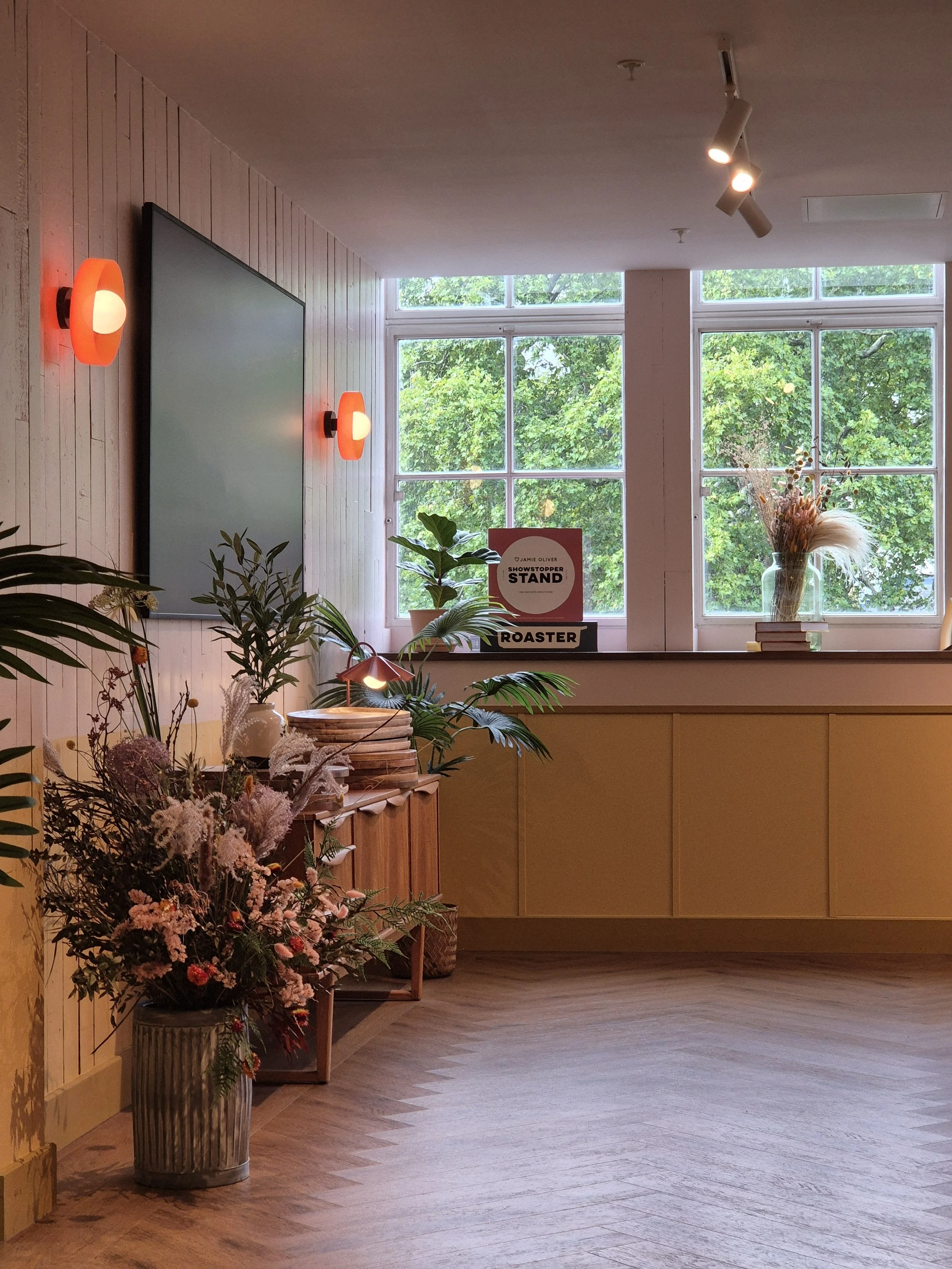
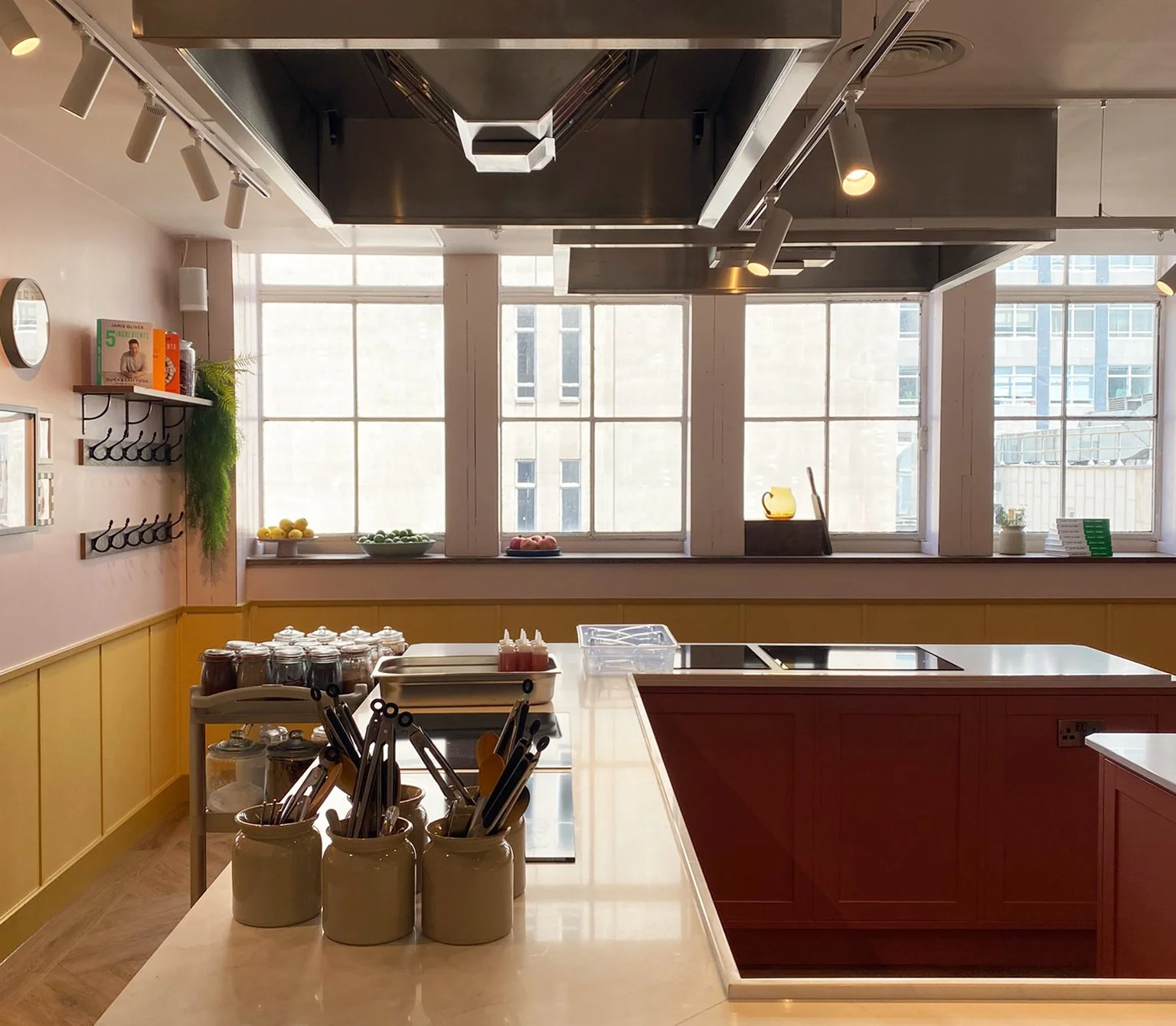
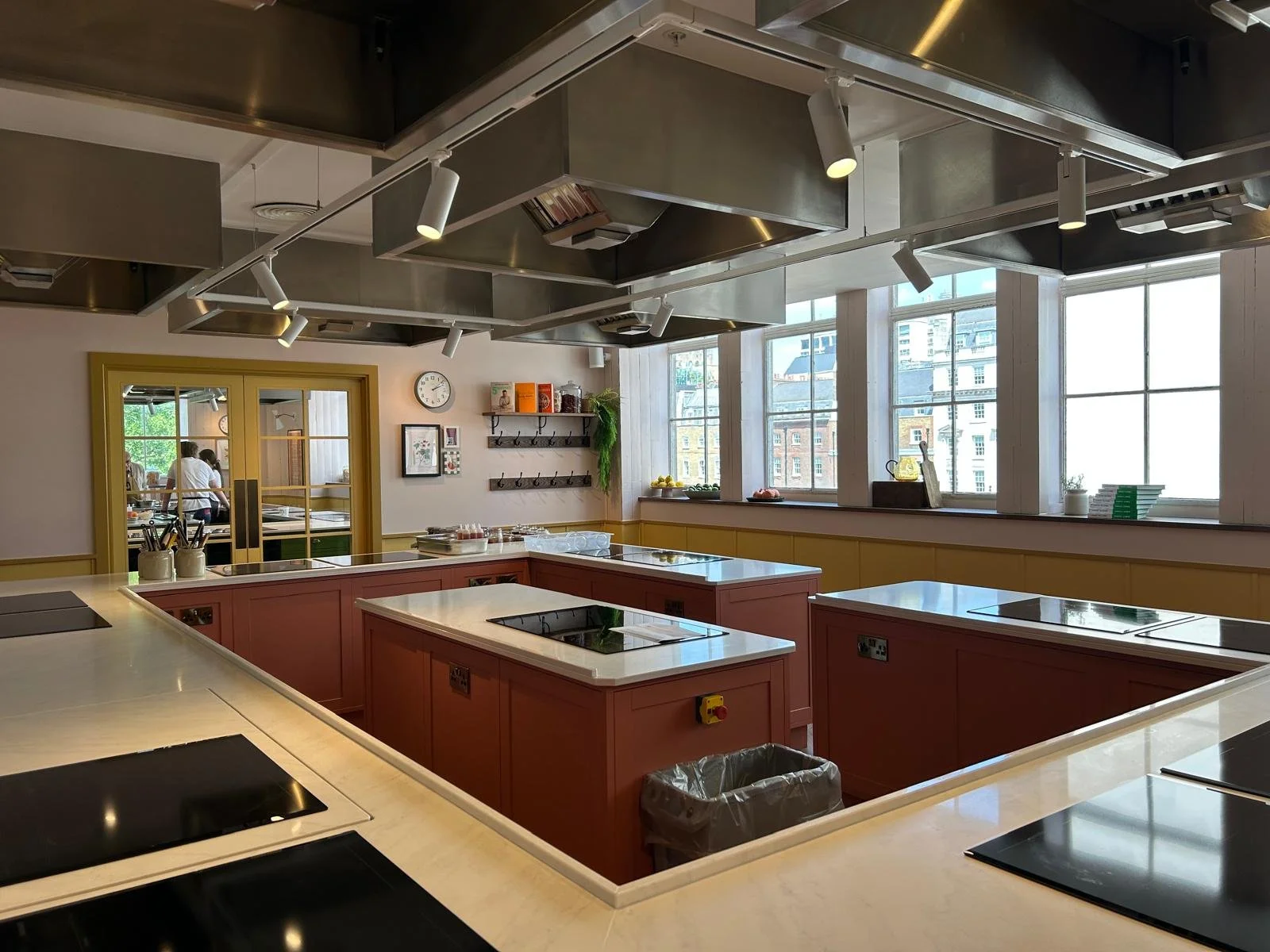
The Jamie Oliver Cookery School & Cafe announced the opening of their new flagship cookery school, the second school for the business, within John Lewis’ Oxford Street flagship store, refurbishing an existing 594 m² restaurant space. Love Design Studio was appointed to evaluate and reduce the project’s carbon impact, while embedding sustainable and circular design principles into the fit-out.
This project continues our ongoing work with the Jamie Oliver Group, building on the Whole Life Cycle Carbon Assessment first carried out at 6 Catherine Street. That assessment established a replicable decarbonisation framework for the estate, identifying carbon hotspots and setting long-term reduction pathways
The Solution
Working closely with Studio Found and the wider design team, we carried out a Whole Life-Cycle Carbon Assessment based on as-built drawings, finishes schedules, and cost plans.
We hosted a workshop to introduce sustainable design approaches and advised on material selection to minimise embodied carbon. Where possible, existing materials were retained and reused, with careful consideration given to the finishes and fixtures contributing most heavily to the carbon footprint. The assessment was benchmarked against GLA and RIBA standards to ensure best practice and long-term environmental performance.
121 tco₂e
The upfront carbon associated with the production of materials specified in the project achieved a B rating when compared to industry benchmarks. This aligns with several key targets, including RIBA 2030 and the GLA aspirational standards.
351 tco₂e
The embodied carbon, accounting for the entire lifecycle of the materials specified in the project - from production to inuse (over 60 years) and end-of-life - achieved a D rating when compared to industry benchmarks. This meets the GLA aspirational target.
The Result
The cookery school achieved a B rating for upfront carbon, meeting the RIBA 2030 target, and a D rating for embodied carbon. By reusing materials and specifying an all-electric kitchen, the scheme not only reduced its embodied impact but also exceeded industry benchmarks for operational energy performance. The project demonstrates how circular design thinking and careful material choices can deliver a high-quality fit-out with significantly reduced carbon emissions.